

Awrah for Men and Women in Islam: What Are the Differences?
When people talk about Islamic modesty, the conversation usually centers on women. But awrah, the Islamic concept of what must be covered applies to every Muslim, male and female. The requirements differ significantly, and both carry real religious weight.
This guide breaks down exactly what awrah means, how it differs between men and women, what the scholarly opinions are, and what it looks like practically — including in sport, swimming, and daily life.
What does awrah mean?
The word awrah (عَوْرَة) comes from an Arabic root meaning vulnerability or exposure. In Islamic jurisprudence, it refers to the parts of the body that must be kept covered in front of others. Exposing the awrah without necessity is considered sinful across all four major schools of Islamic law — the Hanafi, Maliki, Shafi'i, and Hanbali traditions.
The concept of awrah is grounded in Quranic commands and prophetic hadith. Allah says in Surah An-Nur (24:30–31):
"Tell the believing men to lower their gaze and guard their private parts… And tell the believing women to lower their gaze and guard their private parts…"
Both men and women are addressed. Both have awrah. The specifics, however, differ.
Awrah for men in Islam
The scholarly consensus across all four madhabs is that the awrah for a man is the area from the navel to the knees — with the majority position being that the navel and knees themselves must also be covered, not merely the area between them.
This means:
- Exposing the thighs is not permissible in front of others
- Tight clothing that reveals the shape of the awrah is also problematic, even if it technically covers the skin
- The awrah applies in front of other men as well as in front of women who are non-mahram
Does men's awrah apply in sport?
Yes, and this is where many Muslim men face a genuine practical challenge. Standard sports shorts, swimming trunks, and football kits typically expose the thighs and often the navel as well. According to Islamic guidelines, participating in sport in conventional Western sportswear does not comply with the requirements of awrah coverage.
This does not mean Muslim men cannot play sport or swim. It means they need appropriate clothing to do so. Longer, loose-fitting shorts that extend past the knee — or an awrah cover worn underneath standard shorts — are the practical solutions most scholars endorse.
Is there any scholarly difference on men's awrah?
There is a minority position within the Maliki school that holds the awrah for men is limited to the private parts only, excluding the thighs. This is not the dominant opinion, but it is a recognized scholarly position. Most Muslim men follow the majority ruling, which includes the thighs.
If you are unsure which scholarly opinion applies within your tradition, consulting your local imam is the recommended approach.
Awrah for women in Islam
The awrah for a woman in front of non-mahram men — men she is not forbidden to marry — is her entire body except the face and hands. This is the position of the majority of Islamic scholars.
This is why Muslim women:
- Wear hijab (head covering) in public
- Cover their arms and legs fully
- Choose modest, non-form-fitting clothing that does not reveal the body's shape
Are there scholarly differences on women's awrah?
Yes. There is a well-known scholarly debate on whether the face and hands are part of a woman's awrah or not. Some scholars, particularly within the Hanbali school and certain Salafi traditions hold that a woman's face is also awrah and should be covered with a niqab. Others hold that the face and hands are excluded from the awrah and need not be covered.
There is also a difference regarding the awrah of a woman in front of other Muslim women: the majority view is that it is the same as a man's awrah (navel to knee), meaning a Muslim woman need not cover her full body in front of other believing women in a private setting.
The awrah in front of mahram male relatives (father, brothers, sons) is also different and generally less restrictive than in front of non-mahram men.
Men vs women: a clear comparison
| Men | Women (in front of non-mahram men) | |
| Awrah boundary | Navel to knees | Entire body except face and hands (majority view) |
|
Head covering required? |
No | Yes (hijab) |
| Face covering required? | No | Scholarly difference (niqab: minority view) |
| Applies in sport? | Yes | Yes |
| Tight clothing permitted? | No — shape must be concealed | No — shape must be concealed |
| Transparent clothing permitted? | No | No |
Why is men's awrah so often overlooked?
Culturally, men's awrah is far less discussed than women's, and far less enforced. A Muslim woman wearing anything less than full coverage is likely to be noticed and commented upon in most Muslim communities. A Muslim man in standard football shorts exposing his thighs is often not questioned at all, even in Islamic spaces.
This is not consistent with the fiqh. Both are obligatory. The relative silence around men's awrah has left many Muslim men unaware that the thighs need to be covered, or uncertain about how to manage it practically. Particularly in Western countries where sports culture makes full-length shorts uncommon.
MyAwrah was founded precisely because of this gap. We grew up in the Netherlands struggling to find swimwear and sportswear that genuinely covered the male awrah while still being functional. Standard swim shorts do not do this. A long T-shirt worn in the pool is impractical. The need for purpose-built halal sportswear for men is real — and was almost entirely unmet until recently.
How to cover the awrah practically — for men
For swimming: Halal swimwear for men should extend from the waist (at or above the navel) to below the knee. They should be loose-fitting, non-transparent when wet, and include an inner lining to prevent revealing the shape of the body. Our modest awrah covering swimming shorts and halal swimming sport shorts for men are designed to meet all of these requirements — and are built to actually function in the water, not just look modest on land.
For sport (football, basketball, gym): An awrah cover — a lightweight inner short worn beneath standard sports shorts — is a practical solution that allows Muslim men to participate in any sport without compromising awrah coverage. It sits from the navel to below the knee and is designed to stay in place during movement.
For everyday wear: Standard trousers, jeans, or longer shorts that cover the thighs and sit at the waist are sufficient for everyday Islamic dress guidelines for men.
How to cover the awrah practically — for women
For swimming: Full-coverage modest swimwear — sometimes called a burkini — covers the arms, legs, and head. Look for options that are non-transparent when wet, non-form-fitting, and allow a full range of movement for actual swimming.
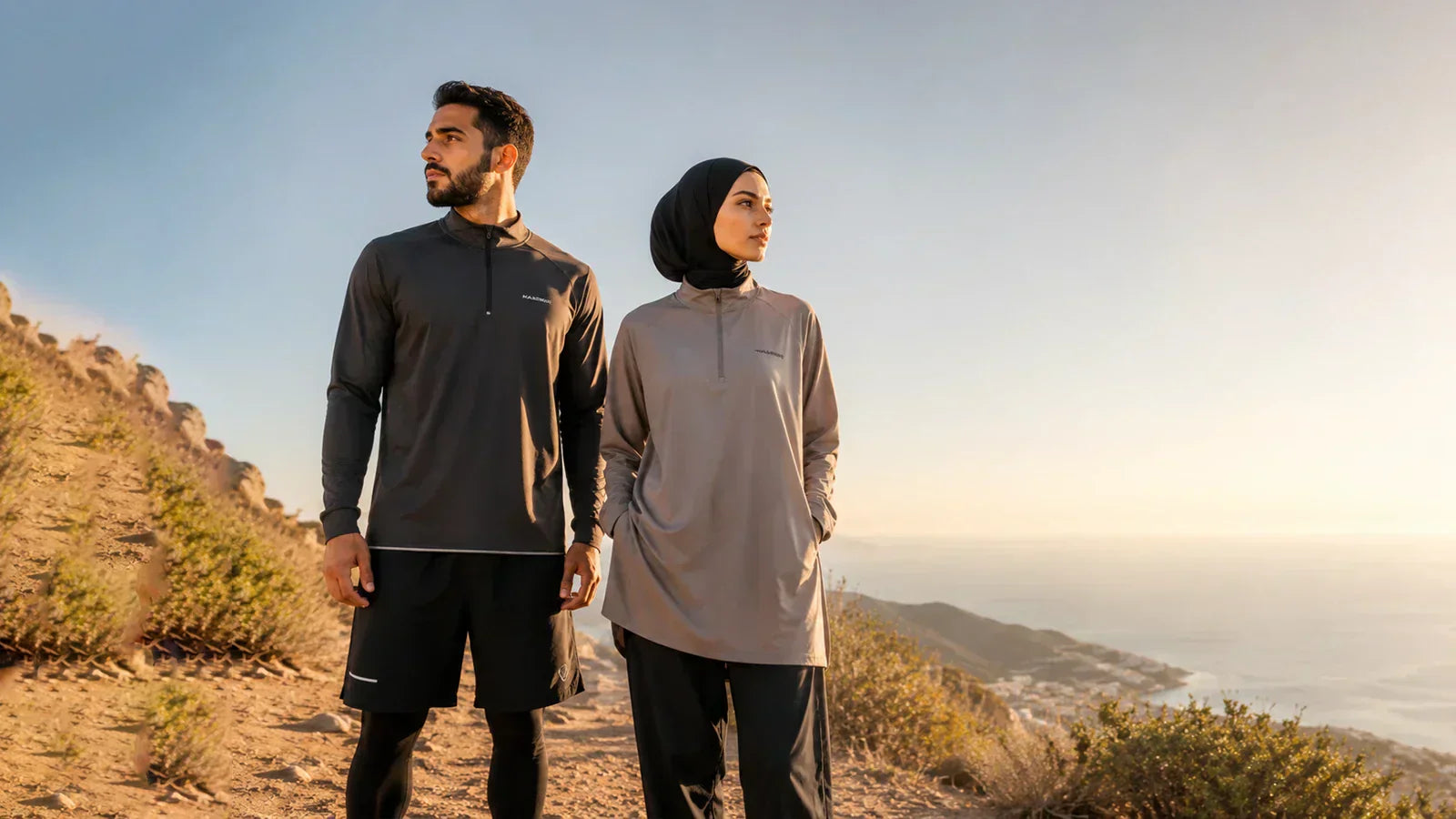
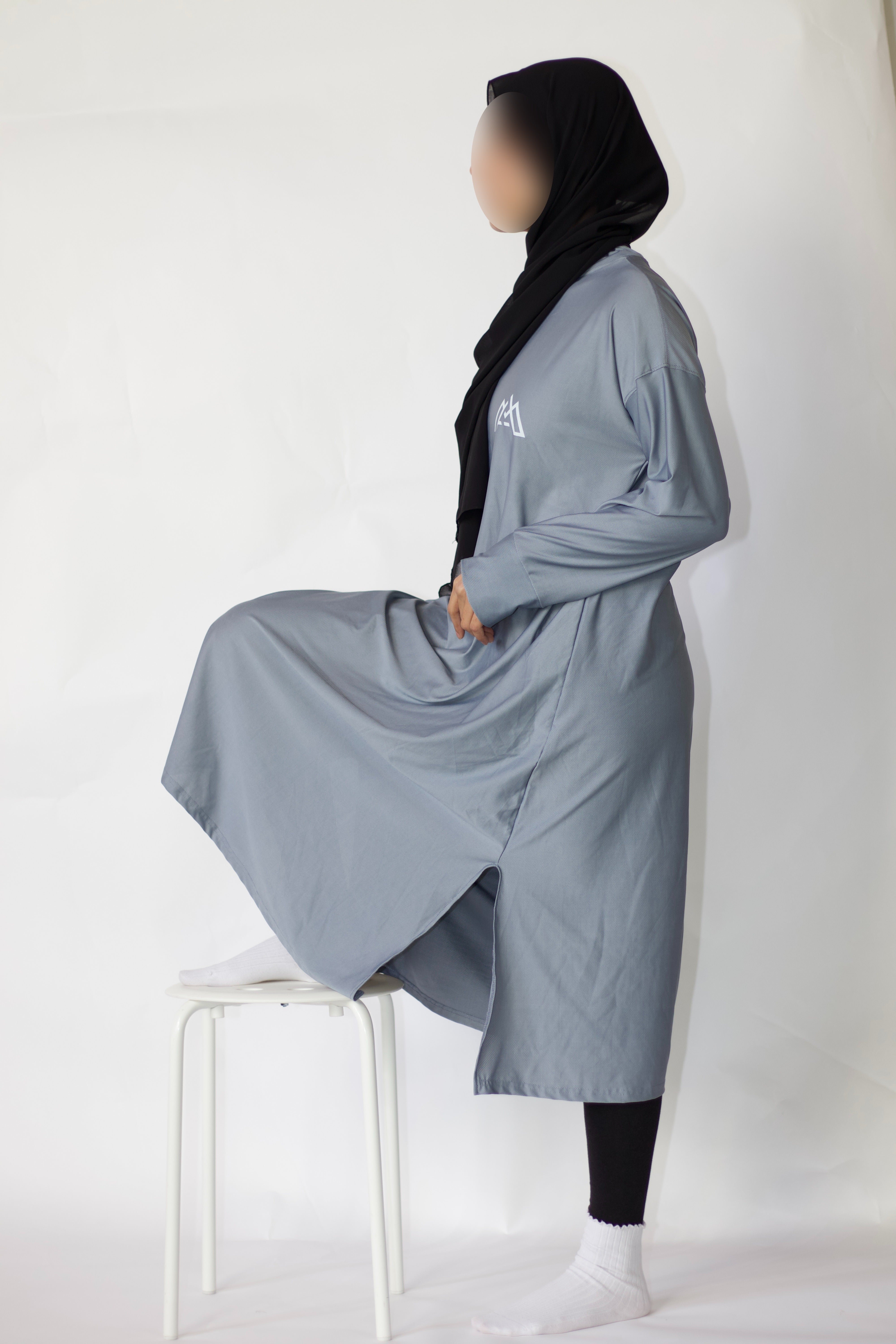
For sport and gym: A loose-fitting sports abaya or a modest set of long-sleeved top and full-length modest trousers with a sports hijab provides awrah coverage during exercise. The fabric should be breathable, quick-drying, and non-form-fitting.
For everyday wear: Loose-fitting clothing that covers the body to the wrists and ankles, combined with a hijab, fulfils the requirements of awrah coverage in public.
Share: